
1. Cost Reduction and Operational Efficiency
2. Access to Specialized Talent
Hiring a virtual workforce gives small businesses access to a global pool of specialized professionals who may not be available locally. This is particularly advantageous for tasks that require specific expertise, such as digital marketing, graphic design, or IT support. For example, a small e-commerce business selling handmade jewelry hired a virtual social media manager from the Philippines. This decision increased their online presence, leading to a 25% increase in sales within six months. Additionally, outsourcing website development and customer service enabled the business owner to focus on product innovation. Partnering with experienced virtual staffing providers ensures that businesses can find skilled professionals with excellent English communication skills and strong work ethics. This allows small businesses to compete with larger brands by delivering high-quality services without the overhead costs of maintaining an in-house team.Know more here: https://pvstaffing.com/the-benefits-of-hiring-remote-filipino-workers-through-companies-with-statutory-benefits/
3. Enhanced Productivity and Flexibility
A virtual workforce handles routine tasks, allowing business owners and in-house teams to focus on strategic decision-making and innovation. A study conducted by Stanford University found that remote workers are 13% more productive than their in-office counterparts. Additionally, the flexibility to scale the workforce based on demand helps businesses adapt quickly to changing market conditions. For example, an online tutoring company hired virtual assistants to manage scheduling, customer inquiries, and administrative tasks. This allowed tutors to concentrate on teaching, leading to better student outcomes and increased client satisfaction. The ability to hire talent across different time zones also enabled the company to offer extended support hours, catering to students worldwide.4. Improved Customer Service and Personalization
5. Scalability and Global Reach
6. Building Trust and Effective Management
Managing a virtual workforce requires clear communication, defined expectations, and a culture of inclusivity. Regular virtual meetings and team-building activities help build trust and align team objectives. Tools like Slack and Trello facilitate collaboration, ensuring that projects are completed on time. For example, a small software development firm implemented weekly video calls and used project management tools to keep virtual teams aligned. This approach improved collaboration, boosted morale, and helped the company secure contracts with larger clients. Additionally, companies that prioritize their remote employees’ well-being by offering fair wages, reliable contracts, and benefits see increased loyalty and performance, which contributes to long-term business growth.7. Competitive Advantage and Long-Term Growth
By leveraging a virtual workforce, small businesses can achieve a competitive advantage through cost savings, access to specialized talent, and increased productivity. The flexibility to scale operations and provide exceptional customer service allows small enterprises to compete with larger brands. Furthermore, remote staffing enables businesses to innovate and adapt to changing market conditions. For example, a digital marketing agency specializing in social media advertising used virtual employees to manage client campaigns, create content, and analyze performance metrics. This allowed the agency to offer comprehensive marketing services at competitive rates, attracting clients who would otherwise hire larger firms. As a result, the agency doubled its client base within two years. Virtual employees also help businesses unlock their full potential by streamlining operations and reducing overhead, allowing them to focus on growth and innovation.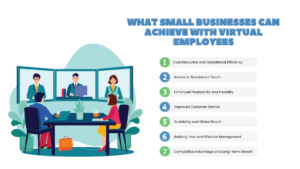
A virtual workforce has become essential for small businesses looking to compete with larger brands. By integrating remote professionals into their teams, small enterprises can reduce costs, increase productivity, and access specialized talent, enabling them to deliver high-quality services on a global scale. Providing fair compensation and benefits ensures that businesses attract and retain skilled professionals who contribute to long-term success.
As businesses embrace digital transformation, those that leverage a virtual workforce will be better positioned for long-term success. Combining cost savings, enhanced productivity, and global reach empowers small businesses to scale operations, increase customer satisfaction, and build a strong market presence. By maximizing the full potential of their remote workforce, small businesses can unlock new opportunities, drive innovation, and achieve sustainable growth.
Read more here: https://pvstaffing.com/maximizing-full-potential-and-growth-of-your-business/
Elevate Your Small Business—Hire Remote Professionals Today!
Ready to take your small business to the next level? Harness the power of a virtual workforce to reduce costs, boost productivity, and provide exceptional customer service. Connect with experienced remote professionals who can help your business grow and thrive.
Schedule a free consultation today and discover how we can help you scale your business. Don’t wait—start building your competitive advantage today!