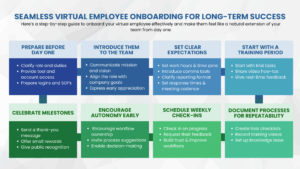
1. Prepare Before Day One
Before your VE even starts, prep like you would for an in-house employee:- Define their responsibilities and daily tasks. Helps your virtual employee (VE) understand what’s expected and where to focus from the start. A detailed job description removes ambiguity and gives your VE a solid foundation to operate efficiently.
- Set up their email, project management access, or tools like Slack, Trello, or Asana. Ensures they have the tools needed to do their job without delays. With these essentials in place, you’re removing friction from their early days and supporting smoother communication.
- Gather login credentials, documentation, or SOPs they’ll need to hit the ground running. Reduces downtime and gets them working productively right away. A well-equipped VE can start adding value immediately with minimal direction.
2. Introduce Them to the Team (Even If It’s Just You)
Remote doesn’t have to mean disconnected. If you have a team, make formal intros through email or a quick team huddle on Zoom. If you’re a solopreneur, schedule a one-on-one welcome call to break the ice.- Share the company’s mission and vision. Helps them understand the bigger purpose behind their work. When VEs feel aligned with your goals, they become more motivated and loyal.
- Let them know how their role fits into the bigger picture. Encourages ownership and a sense of contribution. VEs are more productive when they understand how their work impacts the business.
- Show appreciation early—it builds motivation and loyalty. Makes them feel welcomed and valued from day one. Recognition can be a simple compliment or even a public shout-out during a call.
3. Set Clear Expectations
Clarity kills confusion. Define:- Working hours and time zone expectations. Prevents scheduling conflicts and promotes a healthy workflow. Knowing when your VE is available helps set reasonable expectations.
- Communication tools (email, Slack, Zoom, etc.). Defines how and where team discussions happen. A standard channel keeps everyone aligned and ensures no message is missed.
- Preferred format for updates, reports, or task completion. Standardizes output and minimizes confusion. Whether it’s daily updates or weekly summaries, consistency matters.
- Response time expectations and meeting schedules. Aligns communication pace to keep things moving smoothly. Agreeing on response windows improves accountability.
4. Start with a Training Period
Don’t assume they’ll instantly “get it.” Start with: How it works:- A trial week of light, structured tasks. Helps both of you adjust and identify strengths or gaps early on. This allows time for learning and gradual immersion into your workflow.
- Loom videos or screen shares for how-to guides. Visual aids make learning faster and easier. Demonstrations are especially helpful for task-based training.
- Real-time feedback so they can course-correct early. Encourages open communication and fast improvement. Feedback fosters growth and establishes a culture of openness.
5. Document Processes for Repeatability
Make your operations scalable. Use your VE onboarding as a chance to:- A trial week of light, structured tasks. Helps both of you adjust and identify strengths or gaps early on. This allows time for learning and gradual immersion into your workflow.
- Loom videos or screen shares for how-to guides. Visual aids make learning faster and easier. Demonstrations are especially helpful for task-based training.
- Real-time feedback so they can course-correct early. Encourages open communication and fast improvement. Feedback fosters growth and establishes a culture of openness.
6. Schedule Weekly Check-Ins
The best way to build momentum? Communicate consistently.- Review goals, blockers, and wins. Keeps progress visible and encourages continuous improvement. It’s a good time to reassess priorities and shift focus if needed.
- Ask for feedback from their side. Shows that their insights matter and builds mutual respect. Constructive feedback strengthens your working relationship.
- Use it to strengthen trust and refine processes. Reinforces transparency and helps improve workflows. You’ll spot bottlenecks and inefficiencies faster with regular communication.
7. Encourage Autonomy Early
Once they’ve shown understanding, give them more ownership:- Let them manage certain workflows independently. Boosts confidence and speeds up decision-making. Autonomy encourages initiative and reduces your managerial load.
- Ask for their input or suggestions on improving processes. Leverages their expertise and promotes innovation. Your VE may have useful insights from prior roles.
- Empower them to flag issues and make decisions where appropriate. Builds accountability and reduces your need to micromanage. Trust builds a strong working partnership.
8. Celebrate Milestones and Wins
Recognition builds morale and keeps your VE motivated. Whether it’s completing their first project, hitting a milestone, or simply doing an excellent job—acknowledge it.- Send a thank-you message. Simple gestures go a long way in making your VE feel appreciated. Recognition improves satisfaction and loyalty.
- Give small rewards or bonuses. Incentivizes good performance and motivates continued excellence. A small gesture can have a big impact.
- Publicly appreciate their contribution during team meetings. Builds morale and reinforces a positive team culture. Peer recognition creates a culture of support.
Final Thoughts:
Seamless onboarding isn’t about perfection—it’s about intentional structure, clear communication, and ongoing support. A well-onboarded virtual employee doesn’t just fill in gaps—they help you move forward faster and smarter. According to a study published in the Journal of Organizational Behavior, structured virtual onboarding can increase new hire productivity by 25% and improve engagement scores by 40%. Remember, your virtual employee is more than a contractor—they’re a strategic partner. When properly onboarded, they can enhance every part of your operation, from admin to customer service, freeing you to focus on big-picture growth. Think of virtual employee onboarding as the foundation of a thriving remote work relationship—one that drives efficiency, loyalty, and long-term success. With remote staffing solutions, administrative support is no longer a bottleneck. Virtual employees can take over tasks that often clog up your schedule. Incorporating smart remote staffing solutions ensures that your business remains scalable, flexible, and ready for the future. Invest in a smooth start, and you’ll build a powerful working relationship that lasts.Ready to onboard your next virtual employee with confidence?
Let Prime Virtual Staffing help you streamline the process and match you with the right talent. Experience the benefits of seamless virtual employee onboarding and reliable remote staffing solutions tailored to your business. 👉 Get in touch with us today and start building a smarter, more agile team.